LyreFlute: Sensor-Based Musical Experience for COPD Rehabilitation
Abstract
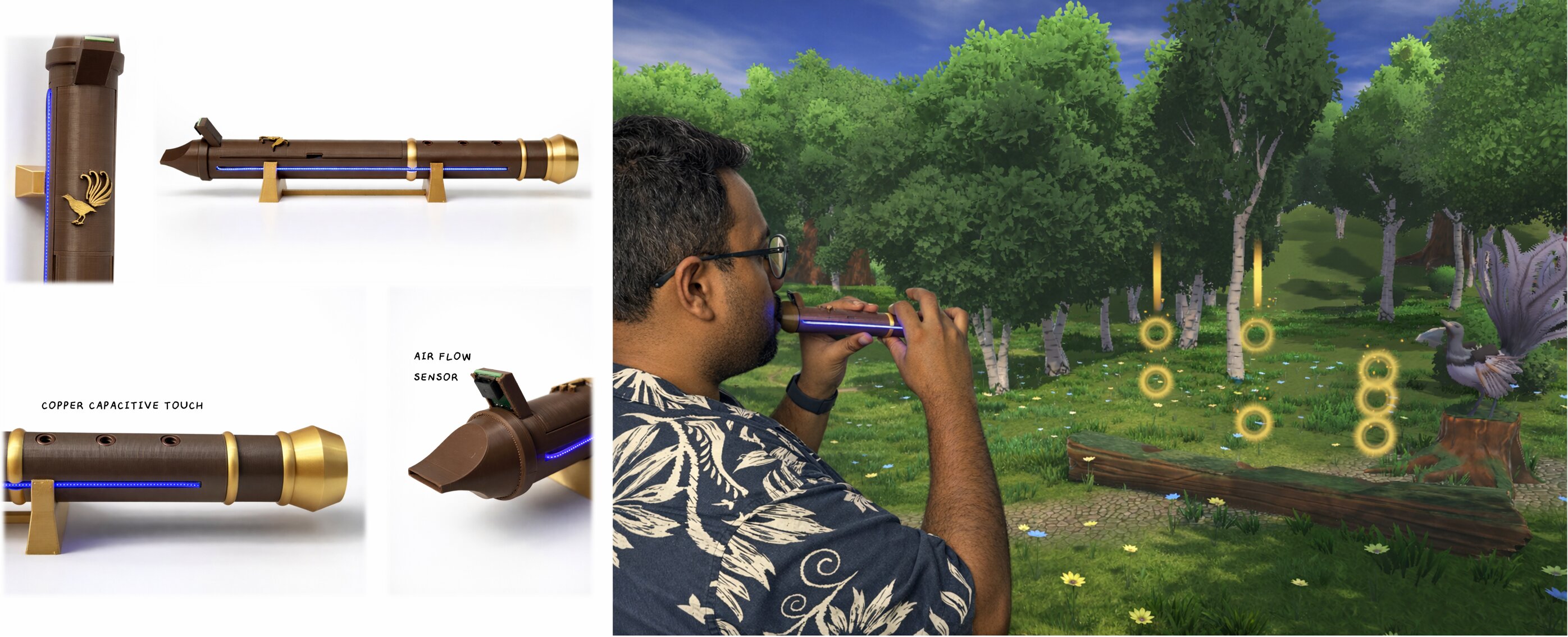
Adherence to at-home COPD breathing exercises remains critically low. We present LyreFlute, a sensor-equipped musical experience that combines accurate breath-tracking with a culturally grounded narrative for respiratory rehabilitation. The system comprises a custom flute with nose and mouth airflow sensors that track breathing patterns, alongside capacitive finger sensors. Users learn songs from an Australian lyrebird through rhythm game mechanics, where correct breathing and finger positioning trigger environmental restoration in a 3D graphics view of the lyrebird's bushfire-damaged habitat. Our CHI demonstration presents a 3-day condensed musical journey progressing through fire suppression, smoke clearing, and habitat restoration, demonstrating how respiratory rehabilitation can move beyond clinical monotony through meaningful storytelling and at-home physiological monitoring.
Takeaways
Three design takeaways drawn from the system rationale, hardware design, and demonstration structure.
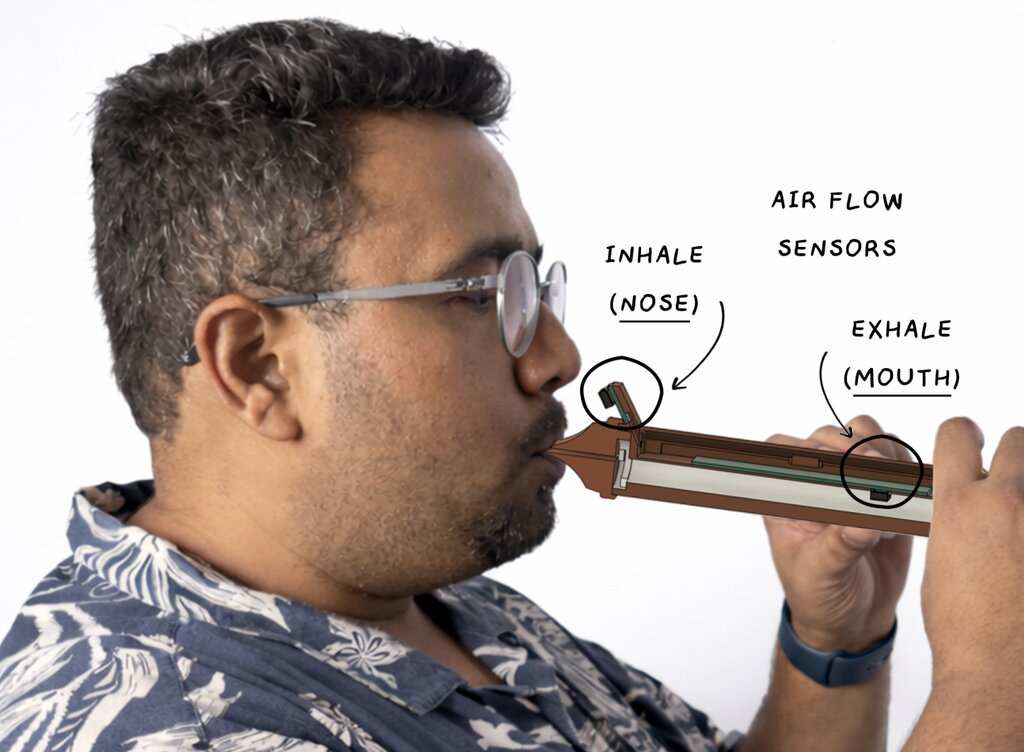
Rehabilitation gets stronger when correct technique is measurable
LyreFlute does more than gamify breathing. It verifies whether users are actually performing the target pattern by separating nasal inhalation from oral exhalation, measuring breath timing and duration, and checking finger position in real time. That makes the experience expressive without losing therapeutic structure.
Engagement features work best when they are grounded in sensing that can distinguish correct performance from approximate imitation.
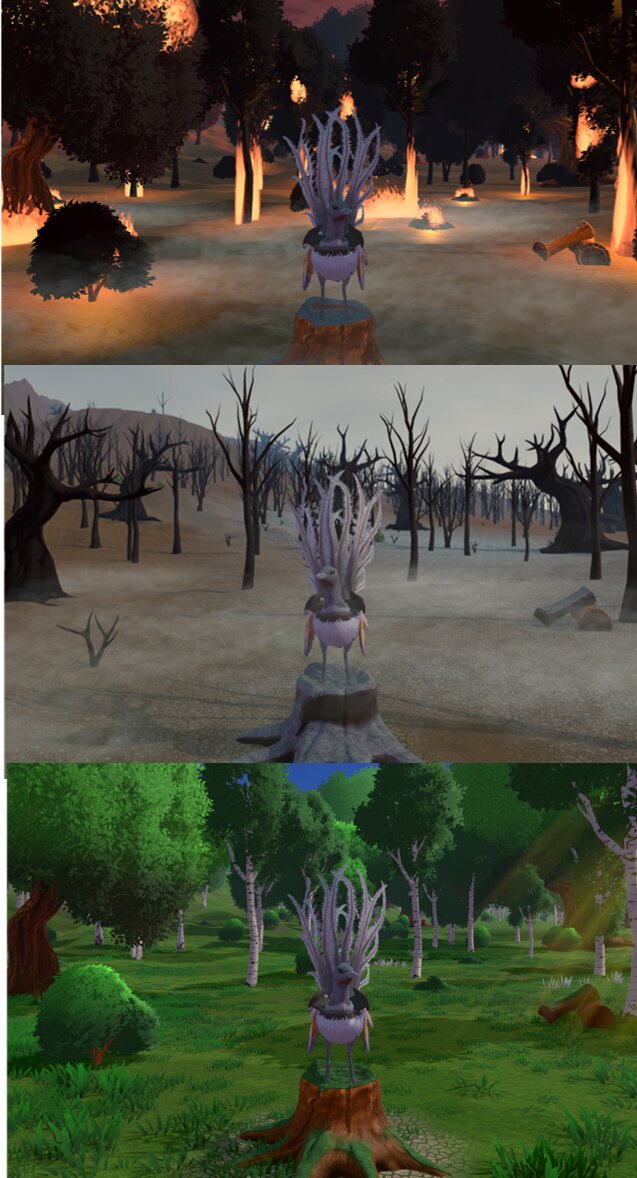
Culturally grounded stories can turn clinical repetition into meaningful progress
The project ties breathing practice to a lyrebird guide and a post-bushfire restoration arc. As users improve, the environment shifts from fire and smoke to ecological recovery. This gives each breath visible consequence and reframes adherence as participation in a story rather than compliance with a routine.
Meaningful narrative can carry repetitive rehabilitation tasks when every successful action changes a world the user cares about.
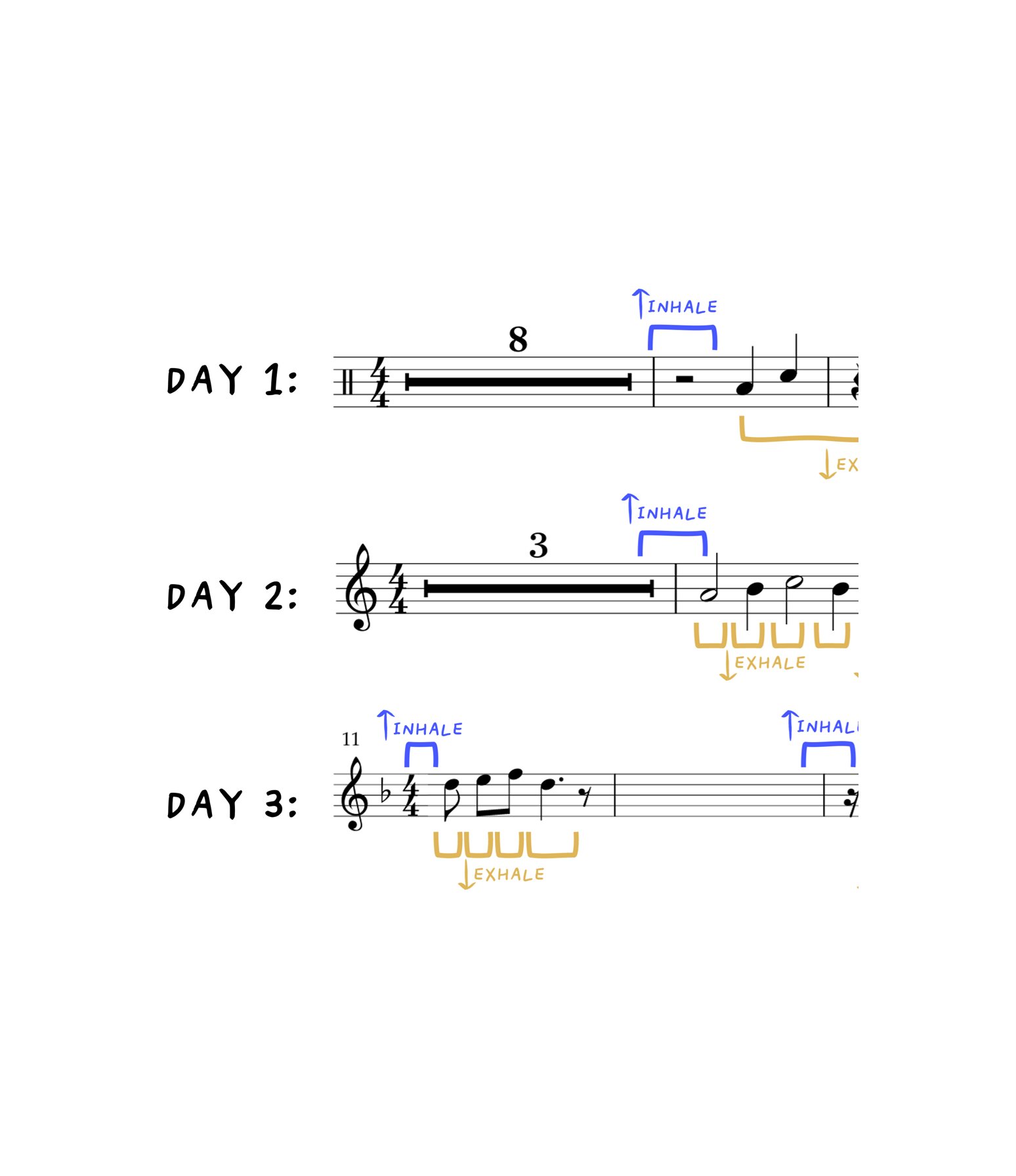
Game structure can make respiratory training legible and approachable
The three-day CHI format demonstrates a clear progression from sustained phrases to denser breath groups and duet-like exchanges. Rhythm-game cues translate invisible respiratory goals into timing targets, making the challenge understandable for non-musicians while still reflecting real training principles.
Compressing a longer clinical protocol into staged playable sessions can make an intervention easier to demonstrate, study, and iterate.
Citation
APA
Valente, A., Cotto, C., Billinghurst, M., & Gupta, K. (2026). LyreFlute: Sensor-Based Musical Experience for COPD Rehabilitation. In Extended Abstracts of the 2026 CHI Conference on Human Factors in Computing Systems (CHI EA '26). Association for Computing Machinery. https://doi.org/10.1145/3772363.3799123
BibTeX
@inproceedings{valente2026lyreflute,
  author    = {Valente, Andreia and Cotto, Claudio and Billinghurst, Mark and Gupta, Kunal},
  title     = {LyreFlute: Sensor-Based Musical Experience for {COPD} Rehabilitation},
  year      = {2026},
  month     = {apr},
  booktitle = {Extended Abstracts of the 2026 CHI Conference on Human Factors in Computing Systems (CHI EA '26)},
  address   = {Barcelona, Spain},
  publisher = {Association for Computing Machinery},
  doi       = {10.1145/3772363.3799123},
  isbn      = {979-8-4007-2281-3},
  keywords  = {Breathing, COPD, Rehabilitation, Biofeedback, Flute, Lyrebird}
}