Enhancing Social Connection in Shared Audiovisual Experiences via Collective Heartbeat Haptic Feedback
Abstract
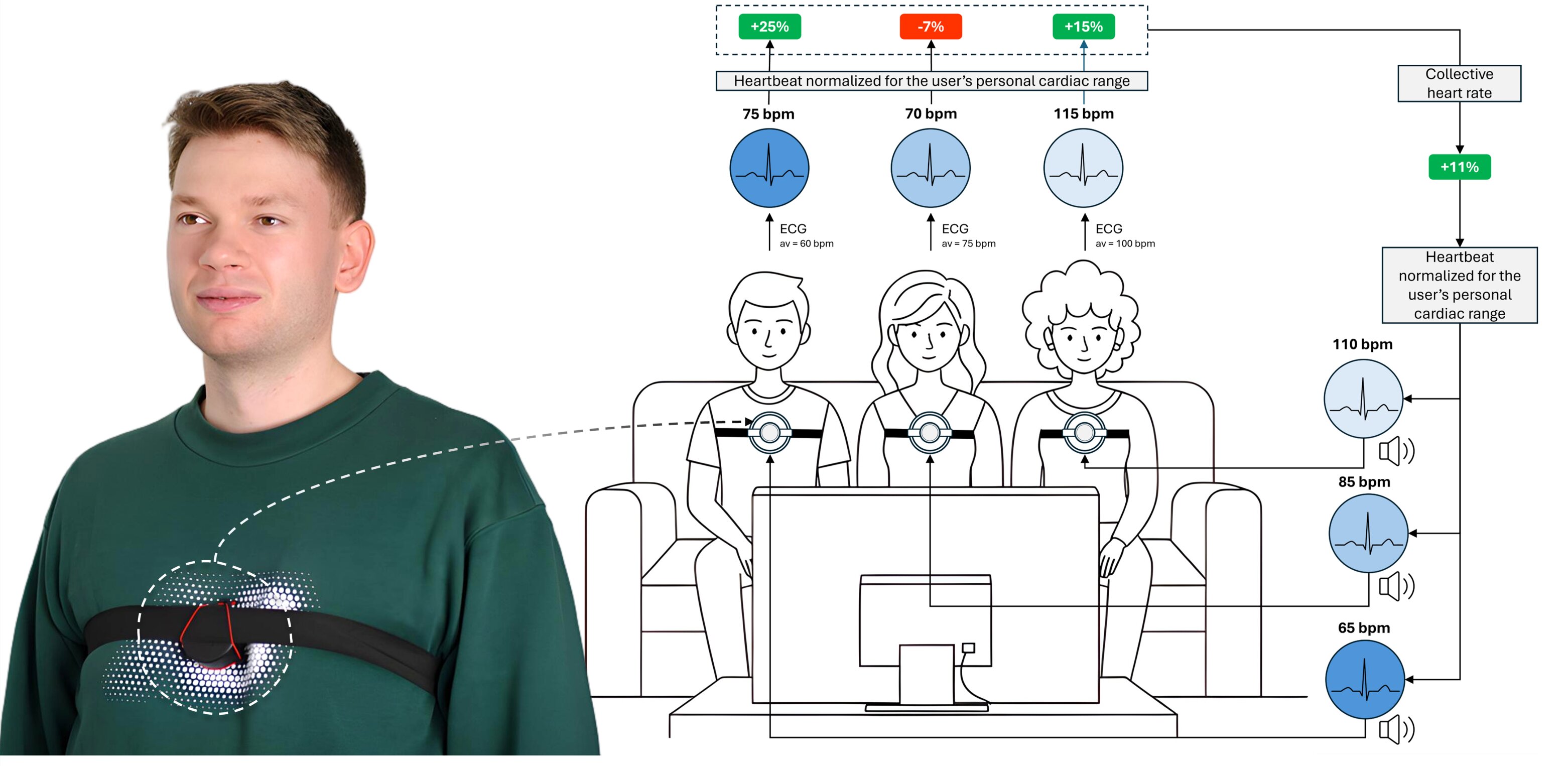
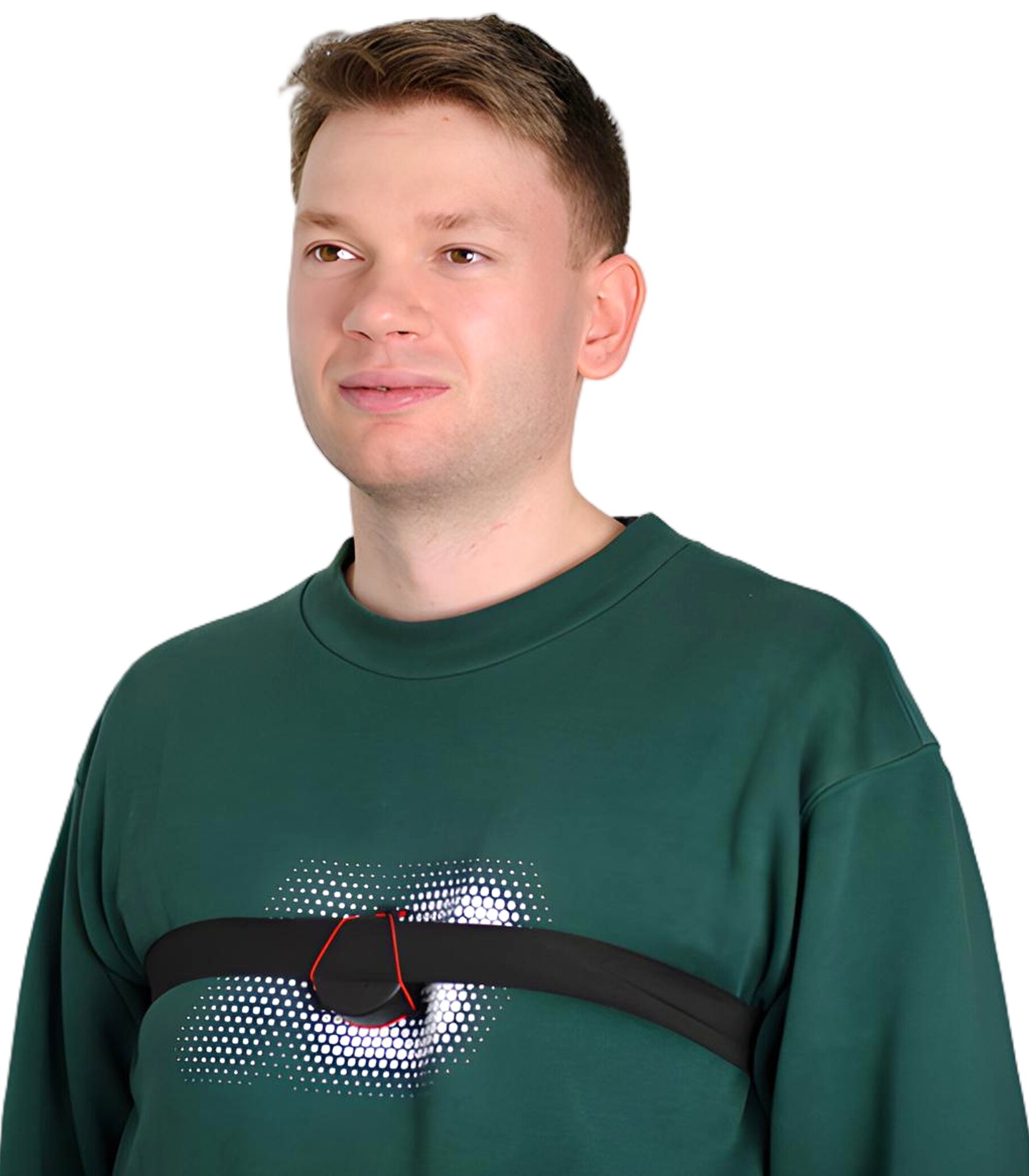
This paper explores whether collective heartbeat haptic feedback can strengthen social connection during shared viewing. The system captures each viewer's heart rate, normalizes it relative to their own baseline, averages the values into a collective heartbeat, and plays that rhythm back through chest-worn haptic transducers. In a study with 36 participants in co-located triads, the feedback significantly increased interpersonal closeness and reduced electrodermal arousal during negative high-arousal clips, while remaining comfortable and non-intrusive. The work suggests that ambient physiological biofeedback can restore part of the togetherness missing from shared audiovisual experiences.
Takeaways
Three design-facing takeaways distilled from the study results and discussion.
Collective physiological awareness can make people feel closer
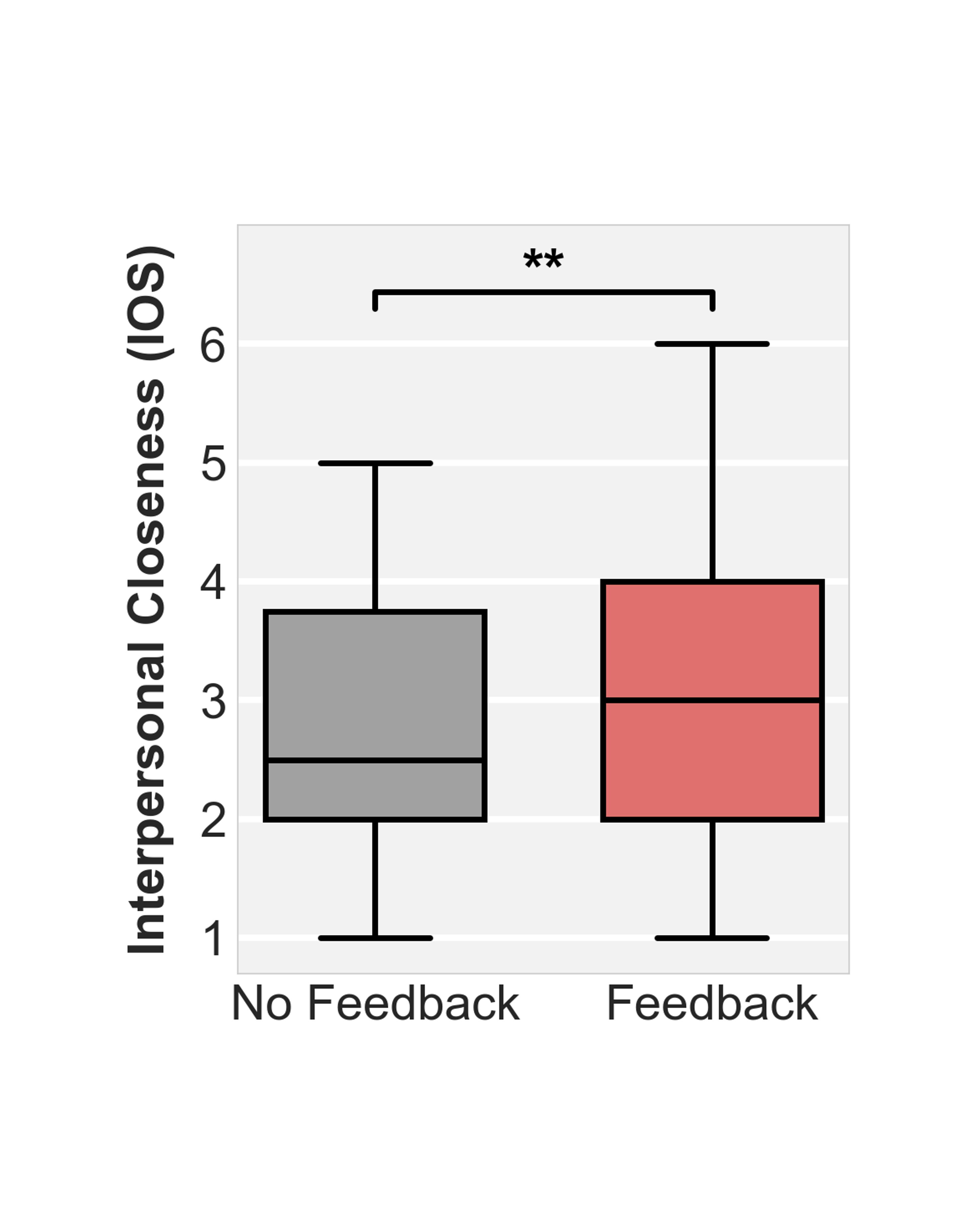
The strongest finding is that participants reported higher interpersonal closeness when they felt the shared heartbeat feedback. This happened even though they were already co-located and could see each other peripherally. The signal did not need to represent exact synchrony. It only needed to make shared participation perceptible.
Systems for shared viewing do not always need richer chat or more explicit interaction. A subtle ambient cue of togetherness can be enough to strengthen connection.
Shared heartbeat feedback may calm intense moments without reducing engagement
During negative high-arousal clips, participants showed fewer EDA peaks in the feedback condition. They did not report lower subjective arousal, which suggests the system may help regulate physiological stress while preserving involvement in the content. The social signal seems to soften isolation rather than flatten emotion.
Collective biofeedback may be useful not only for connection, but also for gentle co-regulation during emotionally intense media experiences.
Haptics work well because they stay in the background
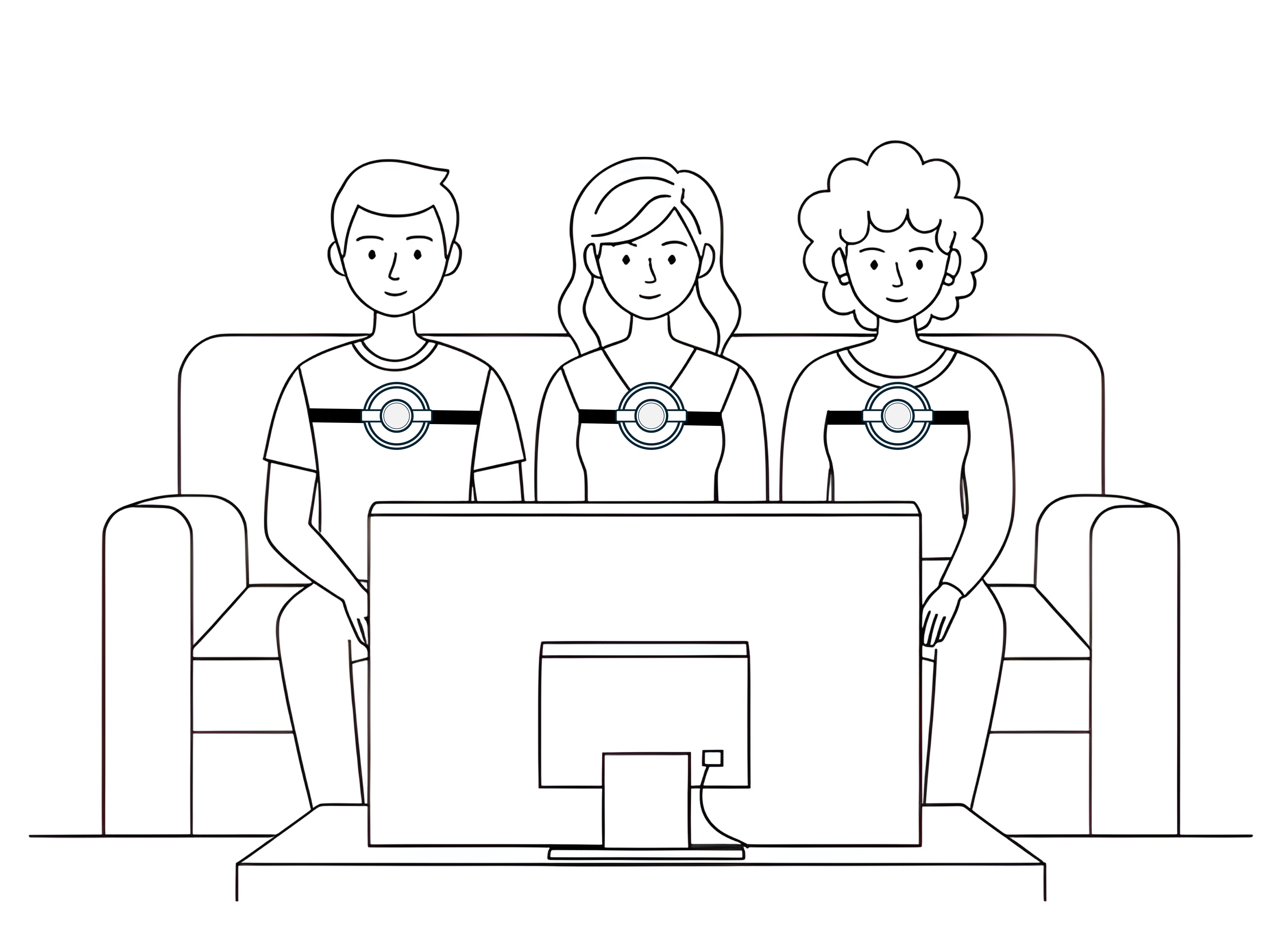
Participants described the feedback as comfortable, pleasant, and non-distracting. That matters because shared viewing already competes for visual and auditory attention. By using the body as a communication channel, the system conveys collective state without pulling focus away from the film or the group.
Haptic feedback is a strong fit for shared media because it adds social awareness without cluttering the screen or interfering with the soundtrack.
Citation
APA
Valente, A., Marcelino, J., Billinghurst, M., & Esteves, A. (2026). Enhancing social connection in shared audiovisual experiences via collective heartbeat haptic feedback. In Extended Abstracts of the 2026 CHI Conference on Human Factors in Computing Systems (CHI EA '26). Association for Computing Machinery. https://doi.org/10.1145/3772363.3798307
BibTeX
@inproceedings{valente2026enhancing,
  author    = {Valente, Andreia and Marcelino, Juliana and Billinghurst, Mark and Esteves, Augusto},
  title     = {Enhancing Social Connection in Shared Audiovisual Experiences via Collective Heartbeat Haptic Feedback},
  year      = {2026},
  month     = {apr},
  booktitle = {Extended Abstracts of the 2026 CHI Conference on Human Factors in Computing Systems (CHI EA '26)},
  address   = {Barcelona, Spain},
  publisher = {Association for Computing Machinery},
  doi       = {10.1145/3772363.3798307},
  isbn      = {979-8-4007-2281-3},
  keywords  = {haptic feedback, heartbeat, biofeedback, social connection, shared experiences, physiological computing}
}