CardioCommXR: Training Empathy Through Gamified Emotional Regulation
Abstract
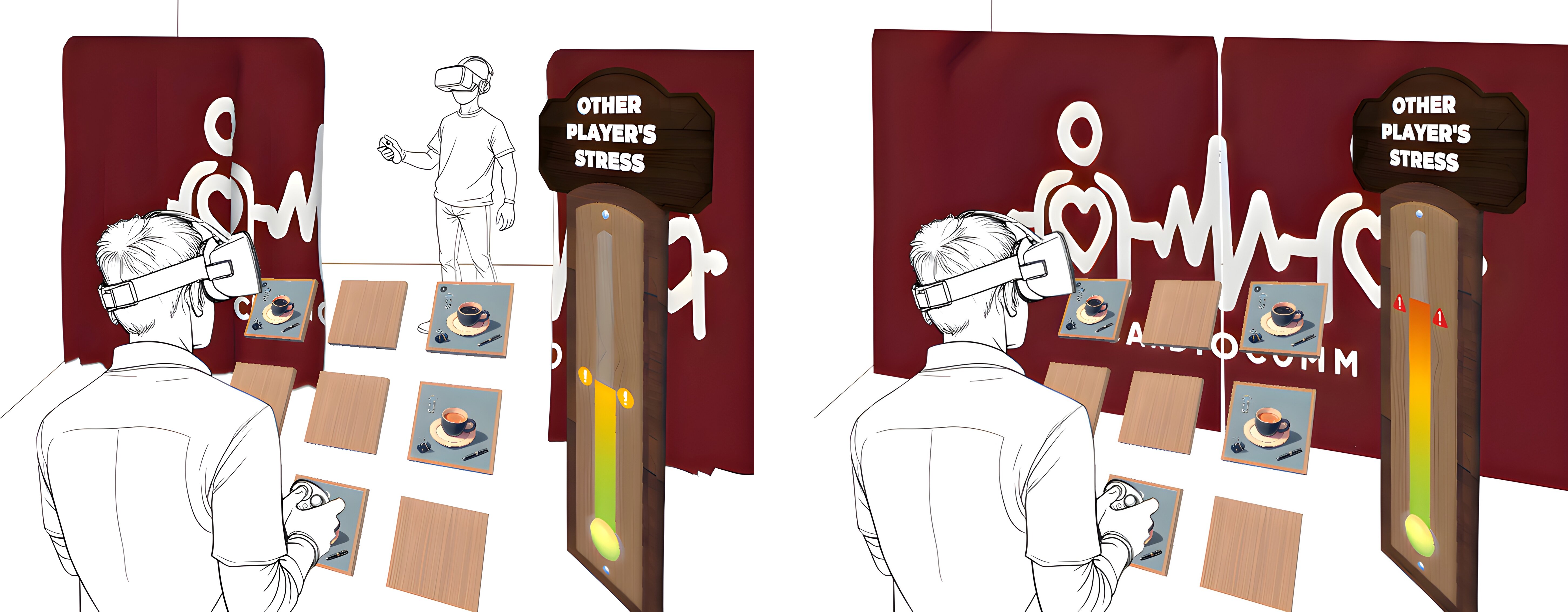
CardioCommXR is a mixed reality collaborative memory-match game that turns empathy into a gameplay requirement rather than an optional extra. Two players describe and match images while monitoring their partner's stress through heart rate variability. When a player's stress remains too high, the system imposes visual and auditory communication barriers, making team success depend on how well players recognize and respond to each other's emotional state. The paper argues that tying physiological awareness to progress creates intrinsic motivation for learning emotional cues.

Video
Takeaways
Three design-facing takeaways distilled from the game design and critical reflection.
Empathy is strongest when it matters for winning
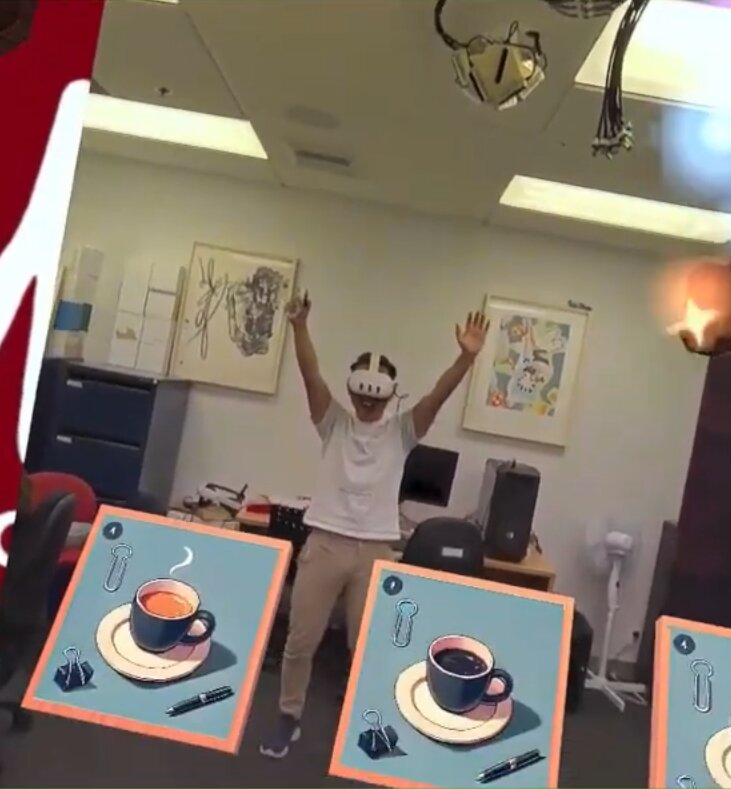
Many biofeedback systems assume that showing physiological information is enough to make people care. CardioCommXR takes a different route. Players only succeed when they notice, interpret, and respond to a partner's stress while also solving the task. Emotional awareness becomes part of the rule system, not an overlay.
Make interpersonal regulation consequential. Users are more likely to learn emotional cues when those cues affect outcomes they already care about.

Stress awareness adds a real strategic layer
The game is not only about remembering card locations. Players also decide when to speak faster, when to reassure, when to slow down, and how to balance their own composure with their partner's state. This creates a task where communication quality and emotional regulation jointly shape performance.
Biofeedback can do more than visualize data. It can reshape the structure of cooperation by introducing new tactical choices and coordination demands.
Showing stress can teach empathy, but it also creates vulnerability
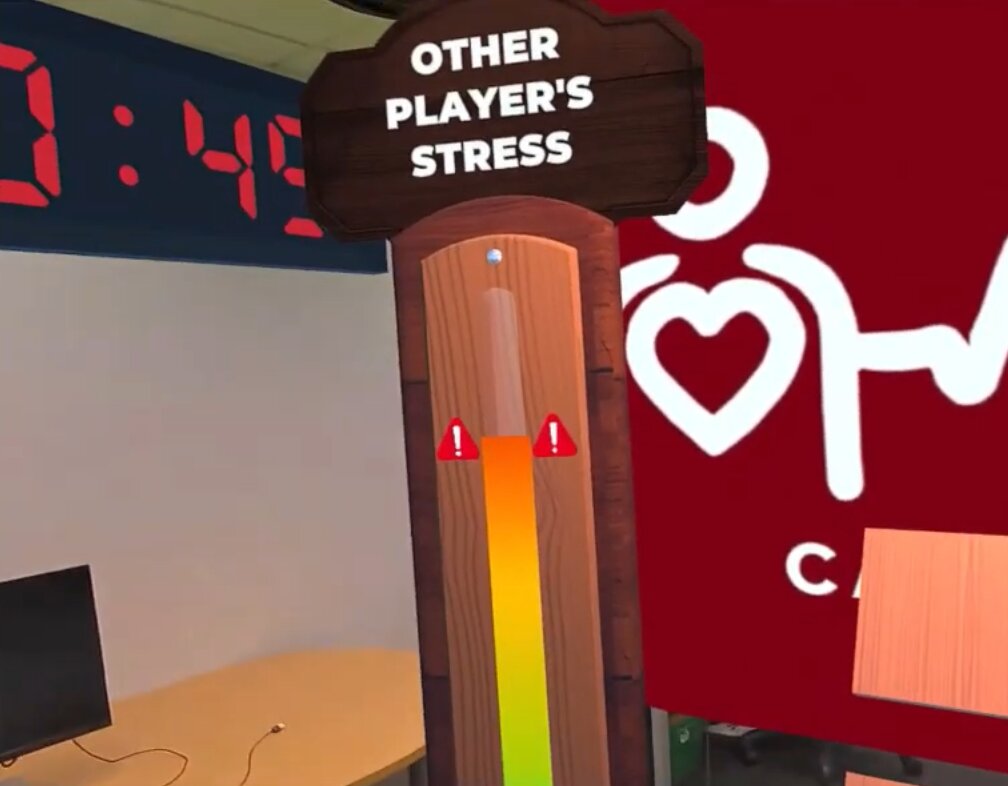
The paper points out a central tension in interpersonal biofeedback. Exposing individual stress levels may help teammates learn supportive behavior, but it can also make people feel watched and amplify anxiety because their state directly affects team success. That is why the paper suggests future designs such as collective stress visualizations instead of individual ones.
Design for support without overexposure. Shared physiological systems should carefully balance awareness, accountability, and psychological safety.
Citation
APA
Valente, A., & Billinghurst, M. (2025). CardioCommXR: Training empathy through gamified emotional regulation. In Proceedings of the Extended Abstracts of the CHI Conference on Human Factors in Computing Systems (CHI EA '25). Association for Computing Machinery. https://doi.org/10.1145/3706599.3720319
BibTeX
@inproceedings{valente2025cardiocommxr,
  author    = {Valente, Andreia and Billinghurst, Mark},
  title     = {CardioCommXR: Training Empathy Through Gamified Emotional Regulation},
  year      = {2025},
  publisher = {Association for Computing Machinery},
  address   = {New York, NY, USA},
  doi       = {10.1145/3706599.3720319},
  booktitle = {Proceedings of the Extended Abstracts of the CHI Conference on Human Factors in Computing Systems},
  articleno = {886},
  numpages  = {4},
  keywords  = {Physiological computing, empathy, biofeedback},
  series    = {CHI EA '25}
}