Modulating Heart Activity and Task Performance Using Haptic Heartbeat Feedback: A Study Across Four Body Placements
Abstract
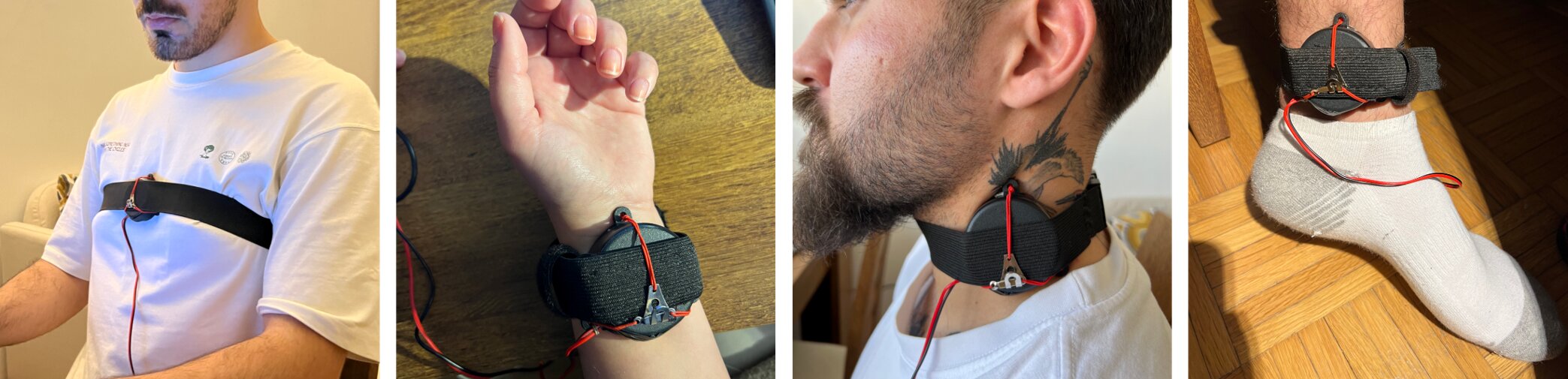
This paper explores the impact of vibrotactile haptic feedback on heart activity when the feedback is provided at four different body locations, the chest, wrist, neck, and ankle, and with two feedback rates, 50 bpm and 110 bpm. A user study found that the neck placement produced higher heart rates and lower heart rate variability, while higher feedback frequencies were associated with increased heart rate and decreased heart rate variability. The chest was preferred in self-reported measures, while the neck was perceived as less satisfying, harmonious, and immersive. Together, these results help clarify how haptic biofeedback that resembles bodily signals can shape both physiological responses and subjective experience.
Takeaways
Three design-facing takeaways distilled from the study results and discussion.
Body placement matters more than the usual wrist default
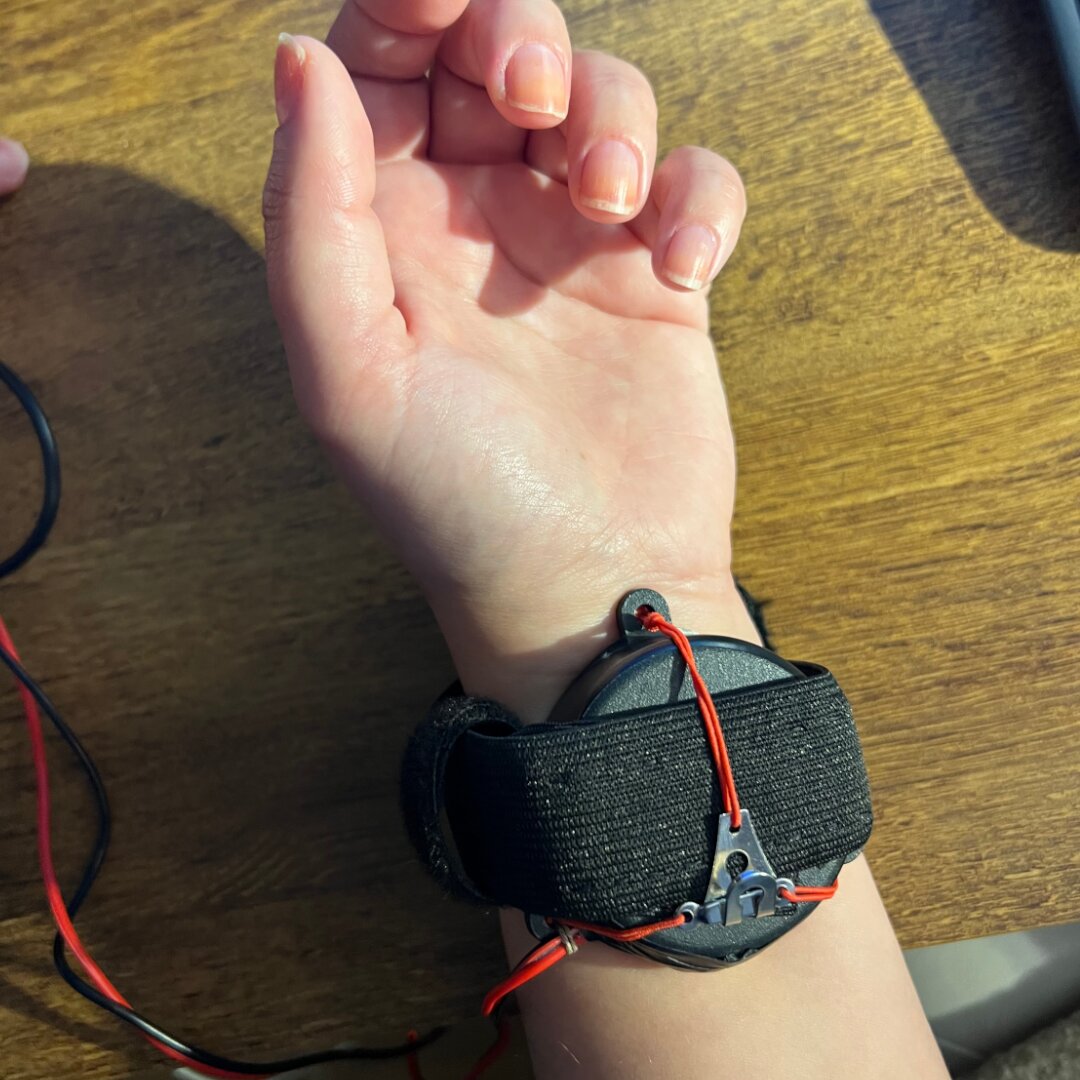
The strongest physiological effects did not come from the wrist. The study found that neck placement elevated heart rate overall, while the ankle paired with 110 bpm was especially effective at increasing heart rate. By contrast, wrist stimulation showed the weakest modulation of heart activity.
Choose placement based on the intended physiological effect, not only on familiarity or convenience. The wrist is easy to deploy, but it may not be the most effective location.
Fast heartbeat feedback boosts arousal, but it costs comfort
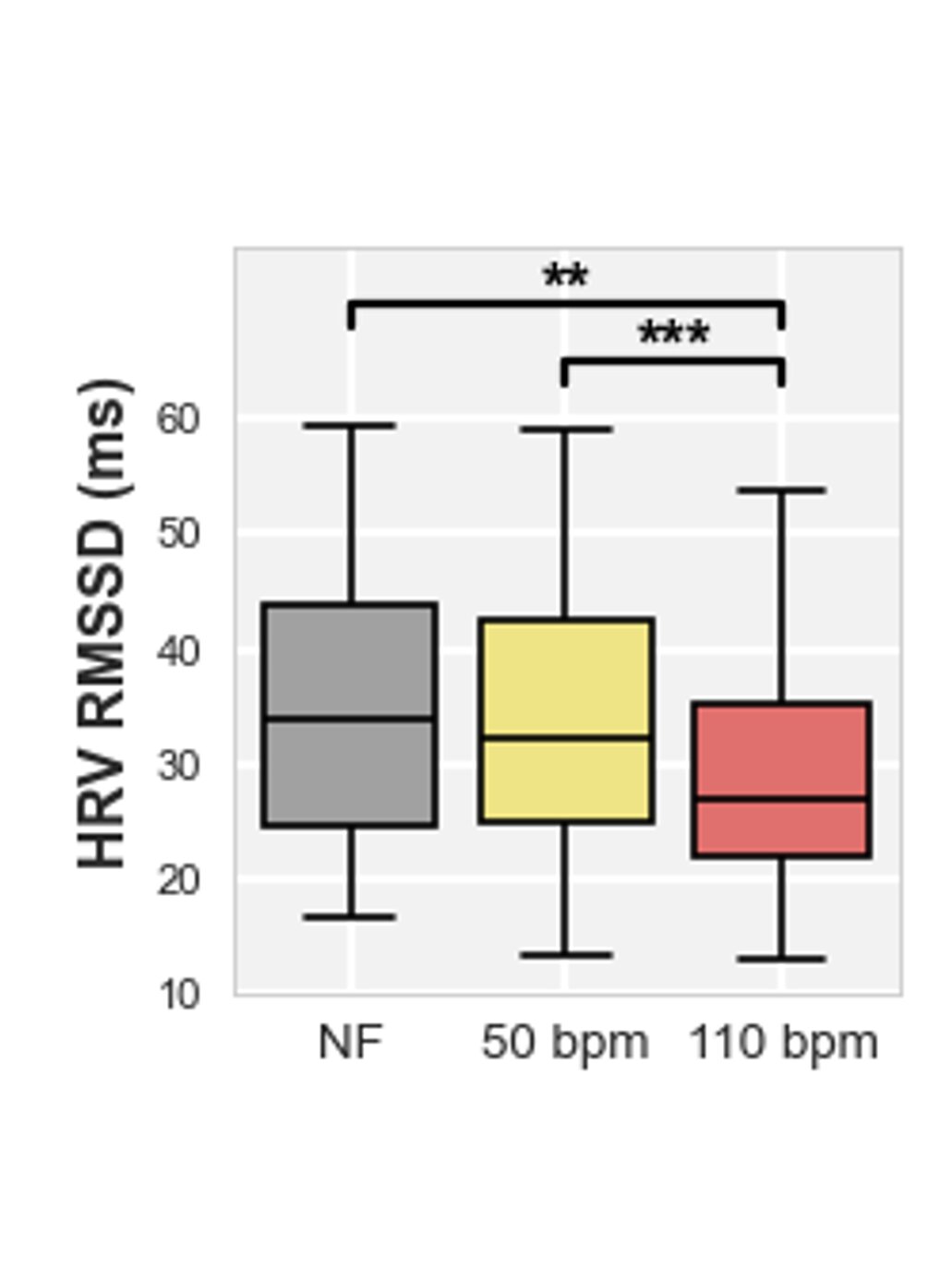
Across conditions, 110 bpm increased heart rate, lowered heart rate variability, and reduced answer time. That makes high-frequency feedback useful when a system wants to induce arousal or speed responses. But the same settings, especially on the neck, were linked to worse subjective experience, including lower autotelic and harmony scores.
Treat physiological effectiveness and user experience as separate axes. The most potent condition is not automatically the best condition.
Different placements support different design goals
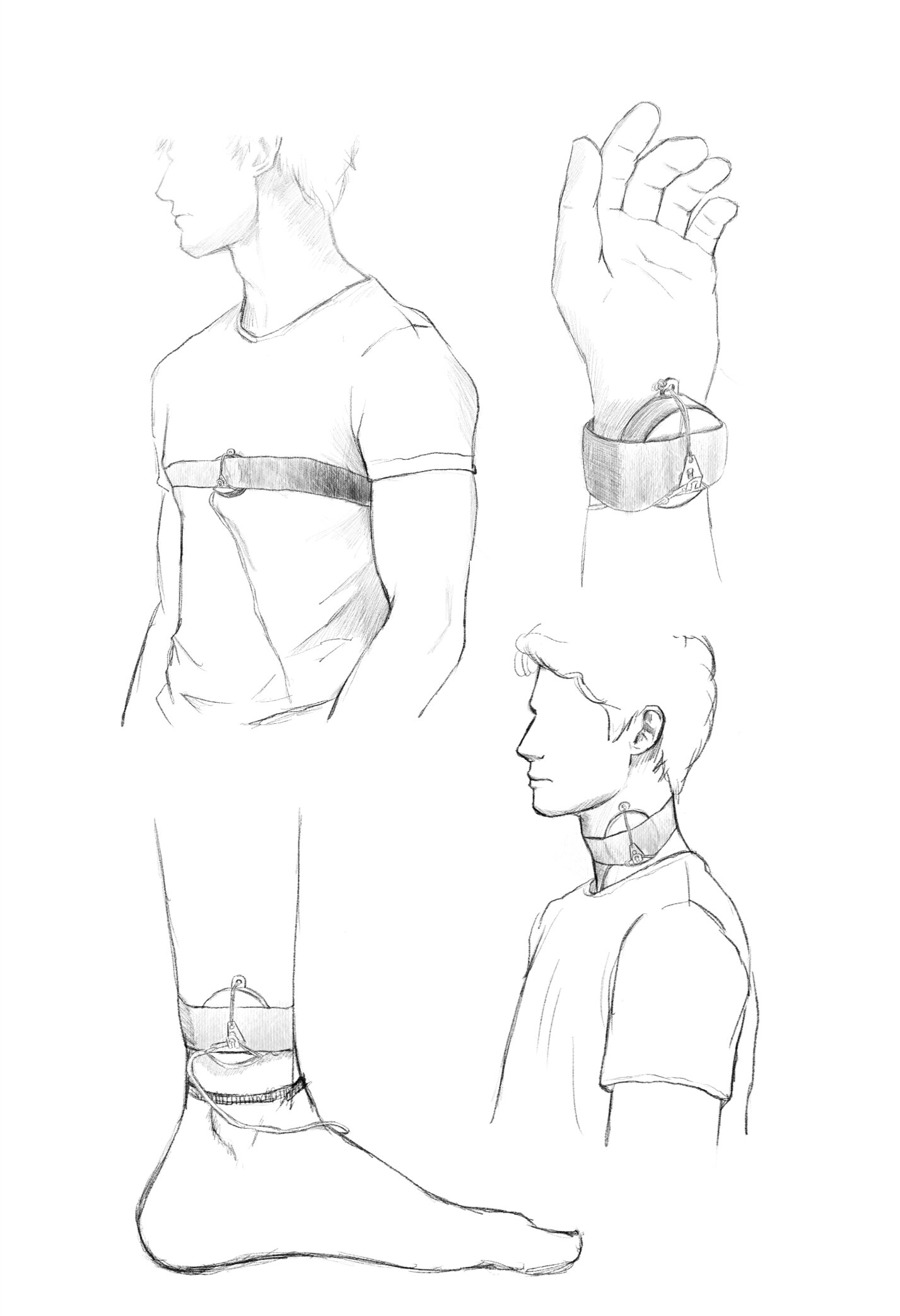
The paper points to a useful design split. Chest placement was the most liked and aligned with lower-anxiety patterns. Ankle placement offered stronger effects with lower awareness, making it promising for subtler interventions. Neck placement was powerful, but also the most distracting and least preferred.
Use chest for comfort-oriented experiences, ankle for more covert arousal cues, and avoid neck when low distraction or high comfort matters.
Citation
APA
Valente, A., Lee, D., Choi, S., Billinghurst, M., & Esteves, A. (2024). Modulating heart activity and task performance using haptic heartbeat feedback: A study across four body placements. In Proceedings of the 37th Annual ACM Symposium on User Interface Software and Technology (UIST '24). Association for Computing Machinery. https://doi.org/10.1145/3654777.3676435
BibTeX
@inproceedings{valente2024modulating,
  author    = {Valente, Andreia and Lee, Dajin and Choi, Seungmoon and Billinghurst, Mark and Esteves, Augusto},
  title     = {Modulating Heart Activity and Task Performance Using Haptic Heartbeat Feedback: A Study Across Four Body Placements},
  year      = {2024},
  publisher = {Association for Computing Machinery},
  address   = {New York, NY, USA},
  doi       = {10.1145/3654777.3676435},
  booktitle = {Proceedings of the 37th Annual ACM Symposium on User Interface Software and Technology},
  articleno = {25},
  numpages  = {13},
  keywords  = {Haptic feedback, cardiac, interoception, physiological computing},
  location  = {Pittsburgh, PA, USA},
  series    = {UIST '24}
}